That’s right — for the first time, we’re being called upon to defend someone who has been a LabourStart correspondent for several years, Andy Hall. Andy, who has worked in Thailand, recently did a report for an NGO highlighting claims of abusive and exploitative policies at a company there, alleging among other things the illegal employment of child labour. The company has now taken him to court, and if convicted, Andy will not only be subject to a potential fine of millions of Euros, but an actual jail term of several years. We’ve been asked by two GUFs — BWI and UNI — to take on this case, and are happy to do so. Please do all you can to promote this campaign.
08
2013
02
2013
02
2013
LabourStart in Numbers – March 2013
The numbers in brackets are for the previous month. Strong gains are highlighted in bold.
Mailing lists
English: 76,648 [76,322]
French: 5,868 [5,893]
Spanish: 4,462 [4,504]
Italian: 3,888 [3,888]
Turkish: 3,116 [3,116]
German: 2,798 [2,614]
Norwegian: 2,369 [2,369]
Russian: 1,951 [1,951]
Dutch: 885 [885]
Chinese: 717 [716]
Finnish: 548 [546]
Polish: 318 [318]
Arabic: 267 [252]
Portuguese: 246 [246]
Japanese: 240 [240]
Hebrew: 209 [208]
Farsi: 207 [207]
Tagalog: 205 [205]
Swedish: 183 [183]
Korean 150 [150]
Danish: 144 [144]
Indonesian : 116 [109]
Czech: 96 [96]
Social networks
Twitter followers –
English: 8,881 [8,659]
Facebook –
Like LabourStart.org page (English): 6,387 [6,327]
Members of LabourStart group: 4,925 [4,909]
Like LabourStart page (French): 294 [279]
Like LabourStart page (Turkish): 96 [92]
UnionBook –
Members: 5,481 [5,440]
LinkedIn – LabourStart group: 1,233 [1,194]
Union group on Flickr: 720 [720]
Website
Correspondents: 624 [613]
01
2013
Weekly review – 23 March – 1 April 2013
I was away on vacation during most of this period, so this report will be relatively brief.
Fix to front page: We often have a problem when a month ends — it won’t correctly show news from the last 48 hours. I have now fixed this on the new home page in English. Today, it shows news from 1 April and 31 March.
Book sales: We’ve now distributed 748 copies of our book on online campaigning; of those 704 were sales and 44 were review copies and gifts (to translators and others). Of those 748, 75 were in French and the rest in English. In March, sales of the French version were three times as high as the English one. We expect a German translation of the book shortly.
Campaigns – new: We launched a campaign in support of LabourStart correspondent Andy Hall in Thailand, but are waiting for a revised (shortened) version of the text before beginning extensive publicity. This campaign was initiated by UNI and BWI in the Asia Pacific region.
Campaigns – upcoming: We may be asked to launch campaigns in the next few days for Turkey, Guatemala, Honduras and Pakistan — all of these from GUFs we work with regularly.
New languages: We’re just about ready to launch our first campaign in Thai.
NASUWT annual conference: I spoke at this yesterday (the NASUWT is Britain’s largest teachers’ union, with 300 members) on a panel on international solidarity — Jalila Al-Salman, vice president of the Bahrain Teachers Association, sat next to me, and thanked LabourStart for what we did. I gave her a signed copy of our book (and sold several others).
Annual survey of trade union use of the net: We completed this on 22 March and published a summary here.
22
2013
3rd annual survey of trade union use of the net – the results
Here’s the summary prepared by Edd Mustill:
The respondents were a real mix of union members, many holding some sort of union position from branch upwards, but many lay members too. The comments also reveal that a number of retired members responded. The gender imbalance – about two-thirds male – is noticeable.
There have been big increases in the number of union members accessing the net on tablets, and smartphones continued to grow in popularity too. This accounts, no doubt, for the large number of people who now access the internet while travelling, making round the clock engagement more necessary than ever.
Google continues its surge in popularity, both in the use of its Chrome browser, and its social network Google+ (although how active Google+ members are on the network is open to question).
Facebook remains by far the most popular social network, but Twitter, LinkedIn, and Google+ are all growing. Unions have responded to this well on Twitter, building themselves a good presence there, but are so far lagging behind their members when it comes to engaging with LinkedIn and Google+: 42.1% of members reported being on LinkedIn, but only 8.9% reported their union having a presence there. 26.6% are on Google+, but only 5.5% have noticed a union presence.
Members seem happy with the quality of online content they receive from their unions, whether it be an email newsletter or a video. But there are still large numbers – even among those filling out this survey – who don’t know whether their union produces, for example, online videos or a smartphone app. This suggests unions may need to do more to promote their online work to their members.
Some of the most interesting and potentially useful results came when we asked people what online work unions should be prioritising. Online campaigning and recruitment were favourites, and there was a big appetite for practical, day-to-day help to be made readily available on websites. The top 3 things that people wanted to see on union websites were: tips on workers’ rights, training for activists, and describing working conditions in companies.
To read a much more detailed account, click here to download the PDF file.
To see the full results of the survey, visit this password-protected site. (Ask us for the password.)
Here is the same thing for the French survey.
22
2013
Weekly review – 7-22 March
Absence: I will be travelling all of next week, back at work on 1st April. Edd will cover for me in the office.
Campaigns launched: We launched a new UK-only campaign for the RMT — our third currently-active campaign for them.
Campaigns to come: In April we anticipate at least two new campaigns — DISK in Turkey wants our help dealing with a German employer who is trying to impose a yellow union on its employees. And UNI and BWI in Asia want us to campaign on behalf of an anti-trafficking campaigner (and LabourStart correspondent) who is being taken to court by a company in Thailand.
Campaigns closed: We closed two campaigns in the last two weeks — Netherlands (FNV) and El Salvador. No clear result in either case.
Campaign improvements: There will be a number of improvements in light of things I learned recently. In all upcoming campaigns, we’ll try to include a Radio Labour component; Marc Belanger has kindly offered to interview key people and we’ll integrate this into the campaigns. I’ve fixed how the campaigns will show when we link to them on Facebook — it will no longer show by default the LabourStart logo, and instead will allow us to choose a better photo from the campaign page itself. Finally, when we’d look at closed campaigns, the number of supporters shown was always wrong. This has now been fixed.
Mass mailings: We did our first A/B testing — see below. Interesting results.
New website design: Launched around 11 days ago. We are now working on getting many of the internal pages to conform to the new design. Masha has suggested a number of new logos. Derek pointed out two problems — top stories with long titles were over-writing the text below, and some stories were being orphaned over the three columns at the bottom; both now fixed. We learned that top news stories in other languages were appearing on the English home page; this too is now fixed.
Internationalization: We now have campaigns and mailings in Slovak. We have a home page displaying news in Korean (we’ve had Korean campaigns for some time). And our new home page design has been implemented in Esperanto — the first language other than English to use this.
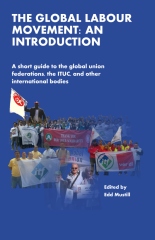
The Global Labour Movement: An Introduction. Our second book — due for launch in early May. In addition to the bits that Edd is writing, we’ll have contributions from the British TUC, Amnesty International, ICTUR, the Global Labour Institutes, and Dan Gallin. And we have activists on the ground answering email interview questions about their relationship with the GUFs. Should be interesting and useful, and we hope to launch it on 4th May. Which brings us to …
LabourStart’s First-Ever May Day Party: Due to be held at London’s only union-owned pub, the Bread & Roses, on 4th May. We’re building interest in this and intend to push it very hard throughout April.
Public speeches: I spoke last week in Oxford at the annual e-Campaigning Forum, on a panel with Anita Gardner of IndustriALL and again on the closing panel. Next Sunday, I’ve been invited to speak at a fringe meeting at the annual conference of Britain’s largest teachers’ union, the NASUWT, on the subject of jailed teacher trade unionists.
Third Annual Survey of Trade Union Use of the Net: Closed today. Expect a report shortly.
20
2013
What subject lines work best for our mailings?
Everyone has an opinion about this, but for the first time, LabourStart has done what’s called A/B testing on one of our regular mailings.
Basically, we told MailChimp to write to 10% of the people on our list with one subject line, used a different subject line for another 10%, and then wait 24 hours. The content of the message stayed the same. The subject line that generated the most opens was then automatically selected for the remaining 80% of the list.
The results were as follows:
- When the subject line was Victory: Valentin Urusov and Basile Mahan Gahé are now free, 14.5% of the recipients opened the message – a total of 1,116.
- When the subject line didn’t include their names — it was simply Victory: Jailed union leaders freed — 15.5% of the recipients opened the message, a total of 1,190.
In other words, the subject line that was free of names generated 74 more opens than the other, which would have translated to 740 additional opens over the entire list.
It’s not a massive difference, but it’s interesting.
Another thing we may want to test is whether mentioning a country name helps or hinders (e.g., Union leaders jailed vs Korean union leaders jailed).
20
2013
Our 23rd language for campaigns
A big thanks to Ján Zeleník who has translated the framework and the first campaign into Slovak.
This is the 23rd language we campaign in now.
You can see our current Turkish campaign in this language here.
We also now have a mailing list in this language with 15 subscribers to begin with.
Slovak is spoken by over 7 million native speakers in Slovakia, the Czech Republic, Serbia and Hungary. The ITUC-affiliated Confederation of Trade Unions of the Slovak Republic (KOZSR) has an estimated 261,000 members.
19
2013
11
2013
Our new site – now live in English
I was forced to launch the new version of our home page in English prematurely due to a human error (my error), but in the end that’s good. There are a number of things that weren’t ready just yet, so I’ll be updating this blog with details of the changes I’ve made today and in the next few days in line with things I know we need to fix, and suggestions that are coming in. Please keep those suggestions coming!
Here are some of the fixes done today:
- A link has been added at the bottom of the page to the old home page — this is primarily to allow us to identify things which are there, but aren’t yet on the new page.
- I’ve restored a link to our Working Women page.
- And to our Newswires page.
- I restored the ‘view more news from your country or region’ box to the bottom list of current news stories.
- I restored the ‘submit news’ link.
- And finally, I restored the link to our privacy page.
There’s a lot more to do (including making this work for all languages), so consider this a process and please be patient.